What is Dyslexia? Proving it is a strength!
On Saturday, I had the privilege of attending the premiere of What is Dyslexia?—and I left feeling inspired to continue on Beyond Spelling's mission.
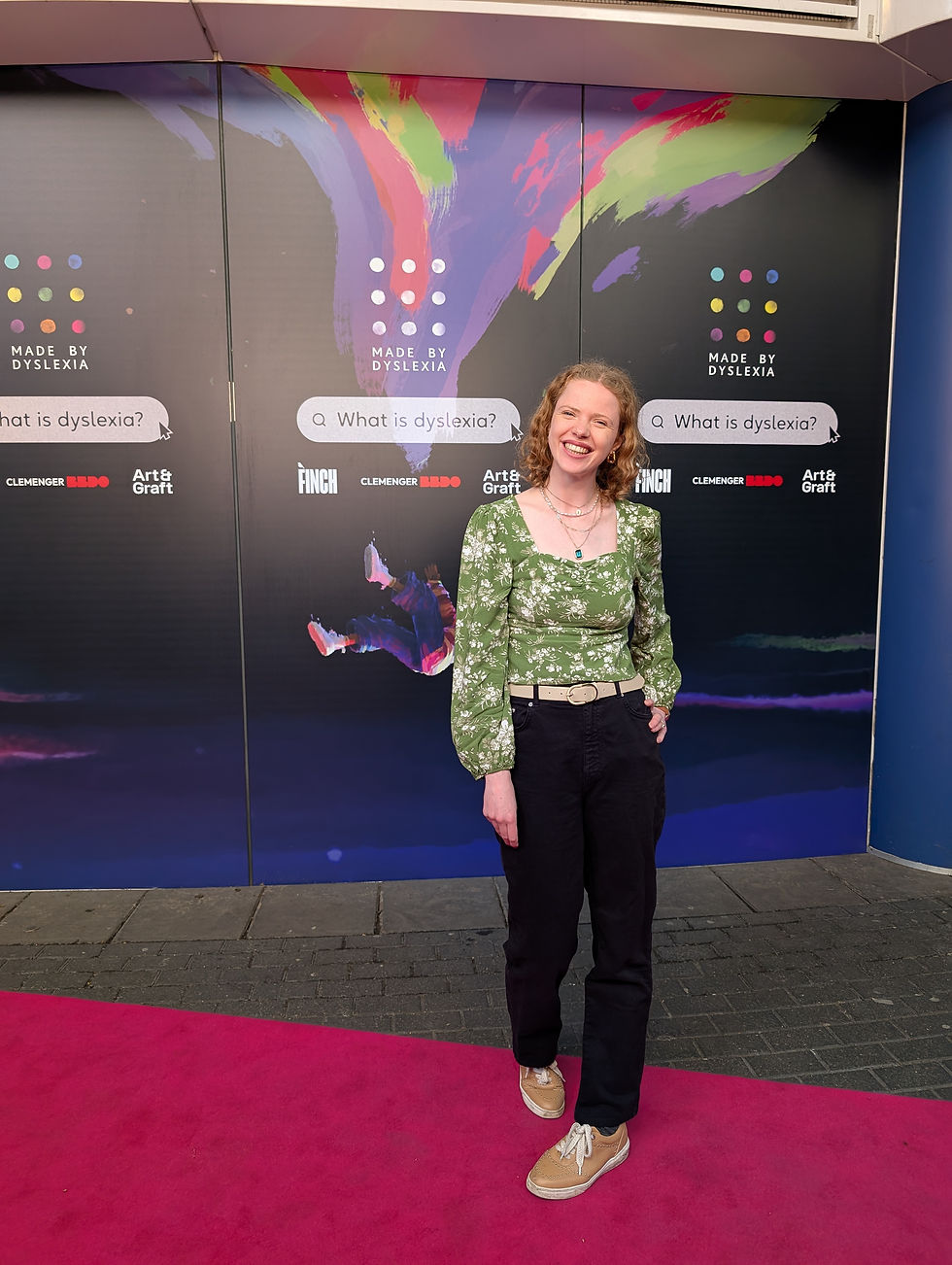
What “What is Dyslexia?” Got Exactly Right
Because this film captures something I see every single day as a teacher, and something that sits at the very heart of why I started Beyond Spelling.
Dyslexia is not a deficit.
It is not a lack of intelligence. It is not something to be “fixed.”
It is a different way of thinking and often, a powerful one.
And yet, our education system doesn’t reflect that.
At the premier we got to listen to a great selection of speakers who use dyslexia to their advantage! Rob Law who invented Trunki, Dame Dr Maggie Aderin who is a space scientist for NASA, a spy from GCHQ (secret identity) to name a few!

What I See in Schools
Schools, as they are currently structured, are not designed for dyslexic learners.
Success is measured through:
how quickly you can decode words
how accurately you can spell
how well you perform in written assessments
So what happens to a child who struggles in those areas?
They begin to feel behind. Then different. Then “less than.” And over time, that message sticks. Not because they aren’t capable; but because the system keeps telling them they aren’t. I see children falling out of love with learning so young.
Flipping the Narrative:
What is Dyslexia? shows us the creativity. The problem-solving. The big-picture thinking.
The strengths that so often go unseen in a classroom focused on literacy benchmarks.
These are not “compensations” for dyslexia. They are part of it. And yet, we rarely fund, nurture, or prioritise these strengths in schools.

Why this matters to me
The mission of Beyond Spelling
Beyond Spelling exists because I don’t want children’s potential to be defined by their reading ability.
Yes, literacy matters. Of course it does.
But it cannot be the only lens through which we see children.
I want to:
fund opportunities that build on children’s strengths
give them access to activities where they can succeed and thrive
rebuild confidence that the classroom may have chipped away
Because when a child starts to feel successful again, everything changes.
They re-engage. They take risks. They begin to believe in themselves.
Because until the system changes, we need to step in.
We need to protect confidence.
We need to champion strengths.
We need to remind children that they are more than their spelling scores.
We need to make sure they never stop loving learning.


Comments